Table of Contents
- Arizona Home Selling
- Which Areas in Arizona Offer the Best Return on Investment and Are Easiest for Residential Property Development?
- What Home Styles, Sizes, and Features Tend to Sell Fastest in the Arizona Market?
- What Should Home Sellers Know About Zoning Laws, Permits, and Regulatory Requirements in Arizona?
- Which Towns or Cities in Arizona Are the Easiest, and Hardest, When It Comes to Navigating Real Estate Regulations?
- What Are the Most Effective Flipping and Resale Strategies for Maximizing Profit in Arizona's Housing Market?
- How Should Sellers Price Their Homes to Attract Buyers While Maximizing Value in Arizona?
- Which Key Economic, Social, and Regulatory Factors Are Driving Current Trends in Arizona's Local Property Markets?
Arizona Home Selling
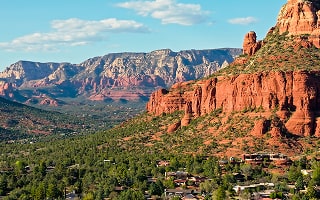
Following a period of pandemic-driven growth that led to all-time-high prices in 2022, Arizona's housing market has experienced some volatility in 2025. With a median sale price of $447,000 (as of September 2025), the typical home in Arizona costs slightly more than the national median of around $435,000. Despite elevated prices and supply constraints, Arizona still offers buyers and investors a favorable entry point and appreciation potential relative to the region. Of Arizona's border states, only New Mexico has a lower median sale price.
Monthly sales volume in Arizona is climbing, with around 8,000 homes sold in September 2025, reflecting a 10% year-over-year increase. For investors, this means property appreciation potential and growing opportunities for rental income. As sales volume increases and interest rates continue to inch down, many are describing a "cautious optimism" for the Arizona housing market.
On the supply side, Arizona continues to be one of the busiest states in the country for new home construction. With 7.86 housing permits issued per 1,000 residents in 2024, new construction in the Grand Canyon State significantly outpaces the U.S. average of 4.3 permits per 1,000 residents. Arizona's building pace signals strong opportunities in expanding neighborhoods, both for flippers and long-term investors.
In terms of property taxes, Arizona has one of the lowest effective rates in the nation at around 0.52%. This figure comes in well under the national median of around 0.83%, making ownership more affordable for buyers and investors.
Arizona's foreclosure rate jumped 27% year over year in Q3 2025 to 1 in every 1,458 homes, slightly above the national median of 1 in every 1,827. With a higher-than-average foreclosure rate, Arizona offers additional opportunities for investors to purchase distressed properties.
Overall, the combination of rising prices, high construction activity, low taxes, and moderate foreclosure rates point to an Arizona housing market that's moving in the direction of balanced growth. If these trends continue, investors may find themselves in a strong position to potentially benefit from property appreciation, rental income, expanding neighborhoods, and occasional opportunities for below-market acquisition.
Which Areas in Arizona Offer the Best Return on Investment and Are Easiest for Residential Property Development?
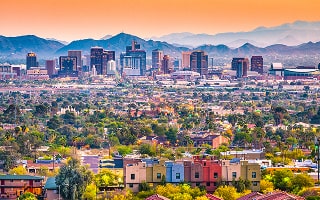
Arizona presents a wealth of opportunities for real estate investors and developers due to its growing population, business-friendly environment, and the availability of affordable land. From booming metro hubs to quieter suburbs, each city, town, and neighborhood offers a unique opportunity to generate potential returns on investment. While some areas are known for their strong rental demand, others offer easier zoning rules or better infrastructure support. In general, the following locations offer some of the best opportunities for real estate investment in Arizona:
-
Scottsdale: The average rent in Scottsdale is $3,350 (as of October 2025), exceeding the national average by more than 50%, and making it an ideal spot for premium rental income. Homes typically sell in about 77 days, with median prices fluctuating in the $800,00-$900,000 range for most of 2025.
-
Phoenix: The metro area property market thrives due to population growth, steady job creation, and flexible zoning. With a median home price of around $450,000 and rent averaging roughly $1,900, strong rental demand can help secure investors' returns.
-
Maricopa: With a typical home value of around $344,000, down about 4% over the past year, investors can enter the market at a relatively lower cost. Rental demand in Maricopa is also high due to its fast-growing population, with average rents of around $1,900 per month.
-
Buckeye: With tax incentives and an overall business-friendly environment, Buckeye offers unique opportunities for developers and long-term investors. Homes sell at median home price of around $400,000, making the Buckeye property market moderately competitive, but highly appealing to builders and investors looking for space to grow.
-
Tucson: Tucson properties offer a lower cost of entry for investors, with home prices around $325,000. Average rents are roughly $1,600 per month, with home values holding relatively steady over the past year. Anchored by government jobs and its largest employers, the University of Arizona and Raytheon, Tucson sees low unemployment and may be poised for population growth and price appreciation.
-
Mesa: After explosive growth in 2021 and 2022, Mesa's housing market has leveled off, with median prices around $460,000. Mesa economic development incentives have attracted thousands of businesses to the city, transforming it into a tech hub with high growth potential for real estate investment.
-
Flagstaff: The city offers a mix of vacation and student rental opportunities due to its year-round tourism and the presence of Northern Arizona University. Flagstaff's median home price hit $725,000 in September 2025, a year-over-year increase of more than 11%. Though supply has recently increased, demand in Flagstaff is still strong, making Flagstaff an attractive target for short- and long-term investors.
-
Yuma: Yuma offers investors a cost-friendly entry point with a profitable market for short-term rentals and modular builds. Homes in Yuma list for around $350,000 and sell in around 55 days.
-
Chandler: The Chandler housing market is expanding mainly due to major employers relocating to the region. With home prices around $534,000 and rents averaging roughly $2,400, buyers may expect solid returns on their investment.
-
Tempe: With students and young professionals moving into the city, Tempe has strong demand for rental homes, fetching average rents of $2,169 per month. The average home price is around $489,000, an increase of 5.7% over the past year, creating potential for both flips and buy-and-hold investments.
What Home Styles, Sizes, and Features Tend to Sell Fastest in the Arizona Market?
The pace of Arizona sales has slowed considerably in recent years, with the typical home in Q3 2025 spending around 71 days on the market, considerably slower than the national median of 51 days. Despite slower sales and some additional supply, inventory remains limited across the state, with a 4-month supply of homes. This shift affords buyers more flexibility, but still favors sellers slightly.
Based on current buyer preferences in Arizona's real estate market, homes with specific styles, sizes, and features sell significantly faster than others. Across Arizona, the fastest-selling homes tend to share some or all of the following features:
-
![]() Bedrooms: In Arizona's family-friendly suburbs like Chandler, Gilbert, and Peoria, homes with 3 to 4 bedrooms and 2 bathrooms are the top choice. These layouts offer just the right amount of space for raising a family and having a home office, without feeling too big or expensive to maintain. On the other hand, in places like Tempe or Downtown Phoenix, 2-bedroom condos and townhomes are fast sellers.
Bedrooms: In Arizona's family-friendly suburbs like Chandler, Gilbert, and Peoria, homes with 3 to 4 bedrooms and 2 bathrooms are the top choice. These layouts offer just the right amount of space for raising a family and having a home office, without feeling too big or expensive to maintain. On the other hand, in places like Tempe or Downtown Phoenix, 2-bedroom condos and townhomes are fast sellers.
-
![]() Size and Lot: In Arizona cities, such as Mesa, Gilbert, and Queen Creek, homes that are 1,500 to 2,500 square feet are ideal. They offer enough room for families to live comfortably without feeling too big or difficult to manage. In more urban areas, like Phoenix and Tucson, homes under 0.25 acres tend to sell fast. In Scottsdale and Paradise Valley, homes with 0.25- to 0.5-acre lots are in high demand.
Size and Lot: In Arizona cities, such as Mesa, Gilbert, and Queen Creek, homes that are 1,500 to 2,500 square feet are ideal. They offer enough room for families to live comfortably without feeling too big or difficult to manage. In more urban areas, like Phoenix and Tucson, homes under 0.25 acres tend to sell fast. In Scottsdale and Paradise Valley, homes with 0.25- to 0.5-acre lots are in high demand.
-
![]() Style: Ranch-style homes are a top pick, especially in Sun City and Surprise, where retirees enjoy single-level living. In Flagstaff, modern farmhouses with open layouts sell more quickly. For young professionals, urban condos and townhomes in places like Roosevelt Row and Scottsdale are in demand and sell fast, usually within a few weeks. Lastly, craftsman bungalows in Tucson are popular with flippers looking to renovate and resell.
Style: Ranch-style homes are a top pick, especially in Sun City and Surprise, where retirees enjoy single-level living. In Flagstaff, modern farmhouses with open layouts sell more quickly. For young professionals, urban condos and townhomes in places like Roosevelt Row and Scottsdale are in demand and sell fast, usually within a few weeks. Lastly, craftsman bungalows in Tucson are popular with flippers looking to renovate and resell.
-
![]() Modern Upgrades: Open kitchens with quartz counters, stainless steel appliances, and fresh neutral colors help sell homes within a few days. In places like Tempe, features like smart thermostats and EV charging setups boost sale prices. Likewise in Tucson and Phoenix, solar panels and energy-efficient upgrades may reduce the number of days the property stays on the market.
Modern Upgrades: Open kitchens with quartz counters, stainless steel appliances, and fresh neutral colors help sell homes within a few days. In places like Tempe, features like smart thermostats and EV charging setups boost sale prices. Likewise in Tucson and Phoenix, solar panels and energy-efficient upgrades may reduce the number of days the property stays on the market.


What Should Home Sellers Know About Zoning Laws, Permits, and Regulatory Requirements in Arizona?

To get the best return and avoid legal troubles, real estate investors in Arizona should understand local zoning laws, permits, and other rules or regulations. For starters, home sellers and developers should obtain zoning compliance letters from the building department or local planning board. Buyers often require this document to confirm that the home's current or proposed use complies with local zoning laws. Obtaining a zoning compliance letter can help ensure the property has a clean title with no open violations.
To ensure maximum return on your investment while avoiding legal troubles, it's also important to check for open permits and past code violations, in addition to understanding local zoning laws. These rules vary across Arizona, with certain areas imposing tight restrictions and others helping streamline property development.
Strict Zoning Laws
Zoning laws vary across Arizona, with many cities enforcing strict rules to preserve neighborhood character and natural beauty. Scottsdale zoning rules tightly regulate building height, lot coverage, and setbacks, especially in Old Town. In Paradise Valley, local laws mandate that most properties have no more than one house per acre, and property splitting is largely prohibited in an effort to maintain the town's luxury feel. In Sedona, the Land Development Code restricts where homes can be built. Likewise, the Town of Carefree has rural zoning with strict limits on erecting buildings near natural washes.
Less Bureaucratic Zoning Laws
Zoning rules are more flexible in many parts of Arizona, especially outside the state's big cities. Maricopa County (unincorporated areas) allows pre-approved model home plans, speeding up permit approval to within weeks. Pinal County offers Special Use Permits, which are generally processed within 15 business days. Eloy typically processes residential permits of all types within 15-50 business days, while Yuma has an online system that generally reviews building permits for residential projects within 5 working days, and commercial projects within 15.
Special Permit, Public Hearing, and Zoning Board Approval Requirements
Some Arizona cities and counties require extra steps for zoning changes or special uses. In Tempe, conditional uses such as home-based businesses or accessory structures exceeding 200 square feet, require a planning agency hearing and neighbor notification. In Tucson, variances or multiunit projects require public hearings and may take between 30-60 days for approval by the Board of Adjustment.
Certificate of Occupancy Requirements
In Arizona, a Certificate of Occupancy (CO) is required before legal occupancy for new builds, major remodels, or change of use. This official document proves the building meets all safety and code requirements. Although closing can still occur, utilities and move-ins typically require a CO, which is issued by the local building department after passing final inspections.
Historic Commission Approval
In Arizona's historic districts, making changes to older homes usually requires special approval. In Phoenix areas like Roosevelt Row and Willo, any exterior updates, including paint or landscaping, to homes over 50 years old must be approved by the Historic Preservation Commission. The Prescott Preservation Commission reviews all proposals to construct, remodel, demolish, or change the exterior appearance of buildings established within historic districts, such as Watson Woods and the Downtown Historic District.
Which Towns or Cities in Arizona Are the Easiest, and Hardest, When It Comes to Navigating Real Estate Regulations?

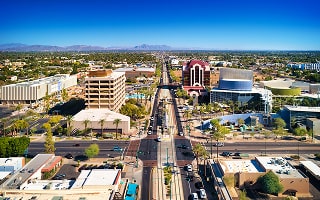
If you intend to sell or develop property in Arizona, following local zoning, permit, and land-use rules is essential. Skipping any step or missing state or local requirements may result in costly fines, delays, or even having to undo completed work, which can cut into your return on investment (ROI). Below is a breakdown of the Arizona real estate market, with major markets categorized by how development friendly or restrictive local zoning laws are.
Development-Friendly Areas
- Yuma County: The county provides the eTRAKiT portal, which allows for online submissions, inspections, and more. Reviews are often quicker for standard residential scopes.
- City of Kingman: The city offers periodic fee waivers and incentives for targeted projects. These programs lower upfront costs and improve ROI for investors and builders.
- City of Mesa: Mesa uses Form-Based Code that emphasizes building form, frontage, and streetscape performance. The code prioritizes the building's use and how it fits into the neighborhood, rather than restricting use types.
- Town of Gilbert: The town of Gilbert offers a One Stop Shop for online self-service permit submittals, streamlining the approval process for developers and investors.

Moderately Regulated Areas
- Pinal County: It takes around 45 days to get final approval from the Pinal County Community Development Department for basic building permits.
- City of Tempe: Home occupations, such as small home-based businesses, must meet city standards and typically require an administrative permit with neighborhood notification.
- City of Gilbert: The city is updating its regulations to follow House Bill 2720, which allows homeowners to build attached or detached accessory dwelling units (ADUs) on single-family lots. However, if you live in an area with a homeowners association (HOA), the association can still limit ADUs through its covenants, conditions, and restrictions.
- Tucson Historic Preservation Zone: In Tucson Historic districts, including Armory Park, Barrio Historico, El Presidio, Fort Lowell, and West University, any changes to the exterior of the building must comply with specific design standards.
Highly Restrictive or Bureaucratic Areas
- Sedona: Sedona's Land Development Code is designed to preserve scenic character and limit visual impacts. It usually includes strict design review and lot controls, which can add time and cost to real estate projects.
- Flagstaff: Flagstaff's zoning rules and heritage-preservation overlays make development harder. Conservation rules and design reviews for historic districts and sensitive lands can also slow down approvals, restricting real estate development.
- Phoenix: The City of Phoenix has multiple zoning overlays and historic preservation areas that add layers to the development process. Projects on designated historic properties require a Certificate of Appropriateness or Certificate of No Effect, in addition to rezoning or variance approvals. Public hearings and neighborhood input further shape entitlements, extending timelines for investors and developers.
Below is a summary of key regulatory factors and the real estate markets where they most prominently affect development in Arizona:
Factor |
Impact on Development |
Where It's Found |
|---|---|---|
Zoning Flexibility |
Determines ease of land use |
Pinal County (Eloy, Coolidge, and many unincorporated communities), Yuma County, and rural Maricopa County |
Historic Preservation Laws |
Adds restrictions |
Phoenix (Roosevelt Row, Willo), Scottsdale (Old Town), Tucson (Barrio Viejo), Prescott Historic Districts |
Wetlands/Conservation |
Limits buildable land |
Sedona Red Rock area, Scottsdale McDowell Sonoran Preserve corridor, Tucson floodplain zones, and Flagstaff |
Affordable Housing Incentives |
Requires affordable units |
Phoenix, Tempe, and Tucson |
Building Code Enforcement |
Affects cost/speed |
Phoenix, Maricopa County, Mesa, and Tucson |
Local Politics/NIMBYism* |
Blocks or delays projects |
Paradise Valley, Sedona, Flagstaff neighborhoods |
*NIMBYism - Not in My Backyard
What Are the Most Effective Flipping and Resale Strategies for Maximizing Profit in Arizona's Housing Market?
In Arizona, homes sit on the market for about 71 days, compared to 51 days nationally. For flippers and resale investors, this means success depends on balancing speed, smart budgeting, and understanding local rules. To maximize profit when flipping and reselling properties in Arizona, consider focusing on the following strategies:
-
![]()
Target Distressed or Foreclosed Homes: In Arizona, counties such as Pinal, Cochise, and Pima have elevated foreclosure rates. This means more opportunities to buy distressed or bank-owned properties (also known as REOs) at rates below the prevailing market value. Cities like Casa Grande, Sierra Vista, and Tucson may also have a higher volume of properties to flip.
-
![]()
Stick to the 70% Rule: To avoid losing money in Arizona's property market, flippers may want to follow the 70% rule. The rule is to pay no more than 70% of the home's after-repair value (ARV), minus repair costs. Maricopa, Pinal, and Pima counties are hotspots where the 70% rule is often effective. In addition, modern ranch or farmhouse styles in places like Chandler, Tucson, and Queen Creek are ideal flipper markets where the 70% rule may be applicable.
-
![]()
Try Wholetailing for Speed: In fast-moving suburbs like Chandler, Surprise, Buckeye, and Maricopa, flippers may find success using a wholetail strategy. Wholetailing is all about doing just enough work to make a property look ready for sale without doing a complete renovation. This may include painting, flooring, or staging. The idea is that a simple facelift can help you sell the property faster, without racking up high renovation costs.
-
![]()
Use the Buy, Rehab, Rent, Refinance, Repeat Method (BRRRR): The BRRRR strategy works in cities like Tempe, Tucson, and Yuma, where rental prices and demand are on the rise. After fixing up a property, you can rent it out and then refinance it to pull out equity. The money from the refi can then be used to purchase the next property.
-
![]()
Consider Micro-Flipping (Digital Wholesaling): Micro-flipping involves finding deals online, securing contracts, and assigning them to investors without involving yourself in the construction process. In hot markets, such as Phoenix, Gilbert, and Tucson, investors can use online platforms to access pre-foreclosure and distressed homes and close deals within a few weeks.
-
![]()
Go Beyond Cosmetic Work (Value-Add Flipping): In Phoenix, Glendale, and across Maricopa County, adding value to a property, such as building an ADU or converting a single-family home into a duplex, may boost its resale value significantly.
-
![]()
Explore Auction and Off-Market Buying Strategies: To score flips with strong margins, shop for properties at sheriff's auctions in rural counties such as Coconino, Gila, and Apache. You can also tap into off-market deals through local agents in places like Flagstaff or Payson. Ideally, you want to get the property below market value and rehab it, then list it on the open market just under round numbers to boost visibility and create a strong sense of urgency.


How Should Sellers Price Their Homes to Attract Buyers While Maximizing Value in Arizona?

To help ensure you get top dollar for your Arizona property, start by engaging the services of a seasoned local real estate agent or licensed appraiser. These professionals will run a 90-day Comparative Market Analysis (CMA) to review active, pending, and recently sold properties in your neighborhood. From there, you can work with them to align your property's list price to the going rate in that environment. Below are some of the best pricing tactics and some locations in Arizona where they might prove most effective:
-
![]() Pricing Just Below Below Market Thresholds: To attract more buyers and showings, price your property just below a key threshold. For example, instead of listing at $500,000, use $499,900. This tactic helps your listing appear in more online searches and gives buyers the feel of a better deal. Pricing just below the threshold works in competitive markets like Scottsdale, Chandler, Gilbert, and Mesa, where buyer demand is high. You'll also see results in fast-moving areas like Queen Creek, Goodyear, and Surprise.
Pricing Just Below Below Market Thresholds: To attract more buyers and showings, price your property just below a key threshold. For example, instead of listing at $500,000, use $499,900. This tactic helps your listing appear in more online searches and gives buyers the feel of a better deal. Pricing just below the threshold works in competitive markets like Scottsdale, Chandler, Gilbert, and Mesa, where buyer demand is high. You'll also see results in fast-moving areas like Queen Creek, Goodyear, and Surprise.
-
![]() Charm Pricing (Psychological Pricing): Pricing your home at $369,900 instead of $370,000 can make a big difference in Arizona's value-driven market. The charm-pricing tactic uses left-number bias to make the home feel more affordable to buyers. It works best in Tucson, Yuma, Mesa, and Casa Grande, where most buyers are budget-conscious first-timers or younger buyers. This strategy can also work in places like Sierra Vista, Apache Junction, and Coolidge.
Charm Pricing (Psychological Pricing): Pricing your home at $369,900 instead of $370,000 can make a big difference in Arizona's value-driven market. The charm-pricing tactic uses left-number bias to make the home feel more affordable to buyers. It works best in Tucson, Yuma, Mesa, and Casa Grande, where most buyers are budget-conscious first-timers or younger buyers. This strategy can also work in places like Sierra Vista, Apache Junction, and Coolidge.
-
![]() Pricing to Create a Bidding War: In high-demand areas like Paradise Valley, Arcadia (Phoenix), North Scottsdale, and Desert Ridge, pricing your home slightly below market value, for example, $889,000 instead of $900,000, can create urgency and competition. Buyers may bring in multiple offers, driving the final sale price above the list price. Pricing to create a bidding war also works in neighborhoods with top-rated schools, and in upscale suburbs such as Oro Valley, Ahwatukee, and newer developments in Queen Creek.
Pricing to Create a Bidding War: In high-demand areas like Paradise Valley, Arcadia (Phoenix), North Scottsdale, and Desert Ridge, pricing your home slightly below market value, for example, $889,000 instead of $900,000, can create urgency and competition. Buyers may bring in multiple offers, driving the final sale price above the list price. Pricing to create a bidding war also works in neighborhoods with top-rated schools, and in upscale suburbs such as Oro Valley, Ahwatukee, and newer developments in Queen Creek.
-
![]() High-Anchor Pricing (Test the Waters): Sellers often "test the waters" by listing at the top of the price range, like $1.15 million in a $1 million to $1.15M comparable price band. This approach is ideal in upscale neighborhoods like Biltmore Estates, Troon North, Silverleaf, and Canyon Pass at Dove Mountain (Marana). High-anchor pricing signals exclusivity, attracts high-end buyers, and leaves room for negotiation. This method of pricing is also ideal for custom homes in areas like Fountain Hills, DC Ranch, or Estrella Mountain Ranch, where unique features and picturesque views justify premium pricing.
High-Anchor Pricing (Test the Waters): Sellers often "test the waters" by listing at the top of the price range, like $1.15 million in a $1 million to $1.15M comparable price band. This approach is ideal in upscale neighborhoods like Biltmore Estates, Troon North, Silverleaf, and Canyon Pass at Dove Mountain (Marana). High-anchor pricing signals exclusivity, attracts high-end buyers, and leaves room for negotiation. This method of pricing is also ideal for custom homes in areas like Fountain Hills, DC Ranch, or Estrella Mountain Ranch, where unique features and picturesque views justify premium pricing.
-
![]() Price-Per-Square-Foot Benchmarking: In areas with similar home layouts, like Surprise, Buckeye, Maricopa, and Queen Creek, buyers compare listings by price per square foot. Matching your home's price to neighborhood norms makes your home competitive and easier to justify during appraisal. This strategy also works well in downtown condo markets in Phoenix, Tempe, and Tucson, where units may be identical.
Price-Per-Square-Foot Benchmarking: In areas with similar home layouts, like Surprise, Buckeye, Maricopa, and Queen Creek, buyers compare listings by price per square foot. Matching your home's price to neighborhood norms makes your home competitive and easier to justify during appraisal. This strategy also works well in downtown condo markets in Phoenix, Tempe, and Tucson, where units may be identical.
-
![]() Appraisal-Backed Pricing: In areas with more FHA or VA buyers, such as Oro Valley , Marana, Goodyear, and Luke Air Force Base-adjacent communities, it's smart to price your home at 95%-100% of its likely appraised value. This helps avoid issues during the loan approval process while keeping the property attractive to first-time or military buyers. Appraisal-backed pricing is also ideal in value-focused markets, such as Casa Grande, Avondale, and Sierra Vista.
Appraisal-Backed Pricing: In areas with more FHA or VA buyers, such as Oro Valley , Marana, Goodyear, and Luke Air Force Base-adjacent communities, it's smart to price your home at 95%-100% of its likely appraised value. This helps avoid issues during the loan approval process while keeping the property attractive to first-time or military buyers. Appraisal-backed pricing is also ideal in value-focused markets, such as Casa Grande, Avondale, and Sierra Vista.
-
![]() Net-to-Seller Pricing: In areas with relatively higher property taxes or selling costs, such as Pima County (Tucson), Yavapai County (Prescott), and parts of Coconino County (Flagstaff), sellers should price backward from their desired profit. Start by estimating closing costs, agent commissions, taxes, and repairs, then set the asking price to ensure you still walk away with your target net profit. This strategy also works well in rural towns like Sedona and Camp Verde, and in suburban markets such as Sahuarita or Cottonwood.
Net-to-Seller Pricing: In areas with relatively higher property taxes or selling costs, such as Pima County (Tucson), Yavapai County (Prescott), and parts of Coconino County (Flagstaff), sellers should price backward from their desired profit. Start by estimating closing costs, agent commissions, taxes, and repairs, then set the asking price to ensure you still walk away with your target net profit. This strategy also works well in rural towns like Sedona and Camp Verde, and in suburban markets such as Sahuarita or Cottonwood.
-
![]() Urgency Pricing (Motivated Seller Strategy): If you intend to sell a property in commuter towns like Goodyear, Surprise, Queen Creek, or Bullhead City, consider using urgency pricing. Urgency pricing is offering your property at a discount for a limited period. This strategy works in situations like estate sales, relocations, or divorces, where selling the property quickly is more important than squeezing out every dollar. Urgency pricing is also effective in smaller cities like Casa Grande, San Tan Valley, and Kingman, where inventory moves more slowly.
Urgency Pricing (Motivated Seller Strategy): If you intend to sell a property in commuter towns like Goodyear, Surprise, Queen Creek, or Bullhead City, consider using urgency pricing. Urgency pricing is offering your property at a discount for a limited period. This strategy works in situations like estate sales, relocations, or divorces, where selling the property quickly is more important than squeezing out every dollar. Urgency pricing is also effective in smaller cities like Casa Grande, San Tan Valley, and Kingman, where inventory moves more slowly.


To sell your home faster and at the best price in Arizona, match your pricing strategy to your home's features and the current market. Start with a 90-day CMA, then pick a pricing approach that fits your area and goals. Use the tips below to help choose the right strategy for your neighborhood, home type, and current market conditions.
Market Condition |
Best Strategy |
|---|---|
Seller's Market |
Underpricing for a bidding war |
Buyer's Market |
Charm pricing or net-to-seller |
Unique, luxury home |
High-anchor + value justification |
Entry-level home |
Just below threshold |
Urgent sale needed |
Aggressive urgency pricing |
Flipper or investor listing |
Appraisal-backed or price-per-square-foot |
Which Key Economic, Social, and Regulatory Factors Are Driving Current Trends in Arizona's Local Property Markets?

Arizona's real estate market is being shaped by a mix of economic growth, population shifts, changing lifestyles, and state laws. From booming job markets and rising construction costs to zoning reforms and consumer sentiment, these factors redefine how and where people live, build, and invest. Here are the factors currently driving demand and supply in Arizona property markets:
![]() Economic Factors
Economic Factors
 Economic Factors
Arizona's economy is growing fast, especially in technology in Phoenix and healthcare in Tucson. The job market has boosted housing demand in the state, both for sales and rentals. However, with wages averaging $34.63 per hour, individual incomes have not kept up with rising home prices. This means that buyers need to work twice as many hours as they currently do to afford a median-priced home. Fortunately, Arizona's overall cost of living is moderate, which helps soften the impact of higher home prices.
On the construction front, Arizona was among the nation's leaders in new construction in 2024, with 7.86 new housing permits per 1,000 residents. But when building permits dropped 21.5% in early 2025, the state fell behind the 49,600 homes needed each year to meet demand. Much of Arizona's new construction growth is centered in the Sun Corridor (Maricopa and Pinal counties) as builders push to reduce the current state housing shortage of more than 56,000 homes.
![]() Demographic and Social Factors
Demographic and Social Factors
 Demographic and Social Factors
Arizona's population continues to grow due to the steady in-migration from retirees, remote workers, and families drawn to the state because of its relative affordability and warm weather. Areas like Greater Phoenix, Tucson, and Queen Creek, are seeing major expansion.
The state's median age of around 39 years, nearly identical to the national median, is increasing demand for affordable starter homes and rentals. As a result, millennials seeking suburban affordability dominate the homebuying market in Gilbert and Chandler. At the same time, many retirees continue to settle in 55+ communities in areas like Sun City and Yuma due to their laid-back environment.
Culturally, many Arizonans value outdoor living and sustainability. The arid climate and high temperatures make water conservation a must-have in new builds and remodels due to its low-maintenance appeal. Cities like Phoenix and Tucson encourage eco-friendly building by setting green construction guidelines.
![]() Regulatory and Legal Framework
Regulatory and Legal Framework
 Regulatory and Legal Framework
Arizona's land-use rules vary widely by location. There is no statewide rent control, so local zoning is essential. Pinal County has flexible zoning laws that make it easier to add ADUs or split lots, making it great for investors and builders. On the other hand, areas like Scottsdale's McDowell Corridor and Sedona use strict overlay districts to protect views, nature, or character, which can potentially slow development.
The speed of obtaining permits depends on the property location. In Yuma County and Gilbert, online systems often provide permit approval in just a few weeks. However, in cities like Tempe or Tucson, going through boards or commissions for special use or rezoning may take months.
![]() Taxation and Fiscal Policy
Taxation and Fiscal Policy
 Taxation and Fiscal Policy
Arizona's tax policies are attractive to both homeowners and investors. The state has a flat income tax rate of 2.5% and treats capital gains tax as regular income (meaning they're subject to the same 2.5% rate) making it appealing to high earners, retirees, and those selling investment properties.
Property taxes are also low, with a below-average effective rate of around 0.52%. This means that homeowners pay less over time, helping with affordability. Arizona also offers tax credits to encourage improvements. Homeowners can obtain tax credits for adding solar panels or improving energy efficiency, which helps encourage renovation and sustainable building across the state.
![]() Housing Policy and Government Programs
Housing Policy and Government Programs
 Housing Policy and Government Programs
Arizona supports homeownership and affordable housing through several government-backed programs. The Arizona Industrial Development Authority, along with local agencies in cities like Tucson and Yuma, offers down payment assistance and below-market financing to help first-time buyers enter the market.
In larger cities such as Tucson and Flagstaff, incentive policies allow developers to reduce the cost of affordable housing development or build more units than usually permitted if they include affordable housing on-site. In some cases, developers may receive reduced impact fees or expedited approvals. These policies aim to increase affordable housing options while still encouraging new construction.
![]() Infrastructure and Development Trends
Infrastructure and Development Trends
 Infrastructure and Development Trends
Arizona's infrastructure investments are shaping where and how communities grow. The Valley Metro light rail now extends into Mesa and Tempe. This development has encouraged new mixed-use real estate projects like condos, apartments, and retail areas within walking distance of stations. These walkable neighborhoods ease traffic and attract buyers looking for convenience.
In places like Pinal County, new highway expansions and interchanges are opening up land for housing that was once considered too remote. At the same time, the state is investing in water solutions, including desalination and infrastructure planning, to support long-term growth. These combined efforts help both cities and suburbs expand while remaining sustainable.
![]() Market Sentiment and Investor Behavior
Market Sentiment and Investor Behavior
 Market Sentiment and Investor Behavior
The Arizona housing market still shows strong buyer interest, even as the market has cooled from all-time highs in 2022. Low home supply and steady mortgage rates keep competition high, especially in fast-moving markets like Phoenix, Chandler, and Gilbert, where listings usually get multiple offers quickly.
Investors remain active across the state. Local flippers focus on projects that boost value, like adding ADUs in Phoenix or Mesa. Out-of-state investors target stable rentals in places like Tucson, usually buying move-in-ready homes. This mix of buyers and investors continues to drive steady demand in Arizona's real estate market.
Arizona's housing market stands out for its steady price growth, low property tax rates, and builder-friendly rules that few states can match. With a typical home price near the national median and 8,000 monthly sales, buyer demand remains strong. In addition, construction activity and development incentives help both homeowners and investors.
From technology-advanced Phoenix and luxury Scottsdale to historic Tucson and growing towns like Queen Creek, smart pricing, focused marketing, and value-add projects like ADUs or cosmetic upgrades may boost property returns. However, it's essential to understand zoning, historic overlays, and permit rules to protect your investment and avoid delays.
Whether you're selling, flipping, or developing property in Arizona, a successful investment comes from aligning your project with the state's economy and local building policies, and choosing the pricing strategy that best suits current market conditions.
Table of Contents
- Arizona Home Selling
- Which Areas in Arizona Offer the Best Return on Investment and Are Easiest for Residential Property Development?
- What Home Styles, Sizes, and Features Tend to Sell Fastest in the Arizona Market?
- What Should Home Sellers Know About Zoning Laws, Permits, and Regulatory Requirements in Arizona?
- Which Towns or Cities in Arizona Are the Easiest, and Hardest, When It Comes to Navigating Real Estate Regulations?
- What Are the Most Effective Flipping and Resale Strategies for Maximizing Profit in Arizona's Housing Market?
- How Should Sellers Price Their Homes to Attract Buyers While Maximizing Value in Arizona?
- Which Key Economic, Social, and Regulatory Factors Are Driving Current Trends in Arizona's Local Property Markets?