How to Search for Tucson Property Records

Before buying a property, conduct as much research as possible to avoid any headaches later. Reviewing property records can reveal interesting details, including ownership history, property values, taxes, liens, amenities, house type, foreclosures, zoning, and more. Tucson property records are public records and can be viewed by anyone. The trick to finding what you need is knowing where to look. Use the resources below to search for Tucson property records.
Pima County Recorder's Office

The Pima County Recorder's Office is the county's document recording and research agency. The office also handles voter registration and early voting. To find property records using this resource, you can use the Public Access Portal. It has records dating back to 1982. You can search by name, document number, document types, CC&R (Covenants, Conditions, & Restrictions), maps, and use an advanced search with additional criteria. You can also use the county's Public Records Research tool to find Tucson property records. Find liens, deeds, and mortgages using this source.
Pima County Assessor's Office
Another primary source for Tucson property records is the Pima County Assessor's Office. This government body is responsible for annually discovering, listing, classifying, and valuing more than 434,514 real property parcels with a Full Cash Value (FCV) of approximately $123 billion. They value property for tax purposes. The Pima County Treasurer's Office then sends out tax bills to residents based on the new values. They have a search tool directly on the website (located at the top of the homepage) where you can enter the parcel ID, address, or name. You can also try the "Advanced Search," where you can search via map, sequence, docket, public land survey, or subdivision. The results will display property values, tax rate, tax amount, liens, foreclosures, and other relevant characteristics about the property. If you wish to visit them in person, their office is located at 240 N Stone Ave, Tucson, AZ 85701.
Arizona Department of Revenue

The Arizona Department of Revenue oversees local city and county assessors and treasurers. This office also serves as a document repository for property tax information and assessments. You can contact them to get property information on specific parcels. You can also visit in person to obtain information; they have offices in Phoenix, Mesa, and Tucson.
Pima County Treasurer's Office
The Pima County Treasurer's Office works closely with the county assessor's office. Together, they value property, set tax rates, bill property owners for taxes, collect the revenue, and distribute it throughout the county for various expenses. You can search this office's website using the state code/parcel or name and mailing address. You can also perform an advanced search using additional criteria. Here you will find property information, assessed values, property tax rates and amounts, any in arrears, liens, and foreclosure properties.
City of Tucson, AZ
The City of Tucson, AZ, offers the public various research tools that provide different ways to find information. Their Map Tool provides information on neighborhoods, zoning districts, liquor licenses, code violations, historic resources, voting precincts, and other relevant details. You can search by address, parcel number, street intersection, neighborhood, school, or subdivision. The Development Activity Reports will show you recent building permit activities. You can also search public records through here. Another tool they provide is the Property Research Online (PRO) search engine, which allows you to search by address, parcel number, or development activity.
Tucson Property Taxes
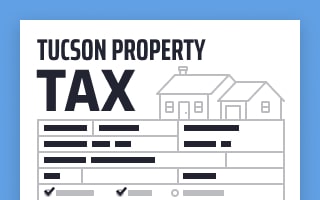
Tucson property taxes fund city expenses, including education, healthcare, fire and police services, EMT services, public parks, transportation, road maintenance, and numerous other municipal services. The Pima County Board of Supervisors sets tax rates for all jurisdictions after the county assessor determines their "Limited and Full Cash Value" by the third Monday in August each year. This office mails out tax bills each September. The first half of the taxes is due on October 1st, with a delinquency date of November 1st. The second half is due on March 1st, with a delinquency date of May 1st by 5:00 p.m. Any unpaid taxes are subject to an interest fee of 16% per year. Although the Pima County Tax Assessor and Treasurer's Office work together to value the property and bill for taxes, both are governed by the Arizona Department of Revenue. Pima County offers several ways to pay property taxes, including online (E-Check via Bill Pay using your bank), E-Check via the website, credit card payments, in person at any one of the branch offices, or by mail by sending your payment to Pima County Treasurer, 240 N. Stone Avenue, Tucson, Arizona 85701.
![]() Assessments
Assessments

Arizona has two types of property taxes, primary and secondary. The city of Tucson collects both primary and secondary taxes. Tucson property taxes are billed and paid to the Pima County Treasurer's Office. Secondary taxes primarily fund public works projects like parks, recreation, libraries, public safety, and transportation. Pima County assesses property once annually, and the new amounts are billed the following year.
![]() Appraisals
Appraisals

The city of Tucson uses an appraisal-type approach to valuing property. They use the term "Limited Value" for the assessed value and "Full Cash Value" for the fair market value (FMV). The county or state determines the fair market value of property by comparing similar properties with others in the local area that have sold within the last two to three years. In cases involving unusual structures or new construction, the county may consult with an appraiser to assist in determining the value. Estate planners, courts, and lenders also utilize appraisals to determine the value of real property.
![]() Tax Rates
Tax Rates

Tucson's property tax rate is 0.5084, which is almost half the national median property tax rate of 1.02% and slightly lower than the state's median rate of 0.56%. Much of Tucson's property is valued lower than market value due to lower local government spending, lower median home values, and state-level property tax assessment practices.
See how Tucson's taxes stack up against other counties in Arizona:
- Apache County 0.84%
- Cochise County 0.72%
- Coconino County 0.51%
- Gila County 0.61%
- Graham County 0.60%
- Greenlee County 0.37%
- La Paz County 0.65%
- Maricopa County 0.51%
- Mohave County 0.51%
- Navajo County 0.65%
- Pinal County 0.58%
- Santa Cruz County 0.67%
- Yavapai County 0.47%
- Yuma County 0.73%
![]() Exemptions
Exemptions

Although Tucson, Arizona, property taxes are relatively affordable, some residents still require assistance in paying them. The county offers some property tax exemptions to help specific individuals. Some of the available exemptions in Tucson are:
- Senior Valuation Protection (freezes their limited value for 3 years for tax purposes)
- Disabled Veterans
- Widow/Widower
- Nonprofit Exemptions
You can apply for any of these exemptions by contacting the Arizona Department of Revenue or the Pima County Tax Assessor's Office.
Tucson Building Permits/Inspections
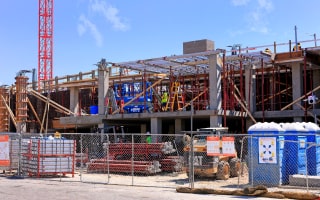
Most construction projects (new construction, renovation, or demolition) in Tucson, Arizona, require a building permit. You can apply for a permit with the City of Tucson's Planning and Development Services Department. You can apply using their online portal (Tucson Development Center Online) or in person. This office is responsible for building development and planning, zoning, enforcing building codes through permits and inspections, and providing public resources. To use the online system, you will need to register for an account. After that, you can apply for permits, request an inspection, search for public records, view maps, and perform other activities. If you prefer to visit them in person, you can do so at City of Tucson, 255 W. Alameda St., Tucson, Arizona 85701. You can also call them by dialing 311.
Some of the available permits in Tucson include:
- New Construction Permit
- Remodels and Additions Permit
- Accessory Structures Permit
- Walls and Fences Permit
- Tenant Improvements Permit
- Electrical/Mechanical Permit
- Septic Permit
- Right-of-Way Permit
- Floodplain Permit
- Site Work Permit
- Manufactured Building Permit
- Demolition Permit
When applying for any of these permits, you must submit the proper documentation (building plans, blueprints, contractor licenses, materials lists, etc.). You must also pay the appropriate fee.
Building inspections are a part of the permit process, ensuring that the work complies with local building and safety codes. You can schedule an inspection by calling the office, visiting in person, or using the online portal.
Real Estate in the City of Tucson

Tucson, located in Pima County, is the second most populous city in Arizona with 542,630 residents. The city has a rich and lengthy history, founded initially as a military fort by the Spanish in 1775. Tucson, Arizona, has 209,792 housing units. Of these, 102,023 are single-family detached homes and 17,586 are 1-unit attached homes. Tucson boasts a diverse range of home styles, including Pueblo Revival, Contemporary, Ranch, Mediterranean, and Tudor Revival, as well as a mix of historic and modern houses. The average home in Tucson costs $331,789, representing a 2.3% decline in value from previous years. The average home price in Tucson is lower than the median price in other states. However, house prices vary substantially depending on where you live in Tucson. Some examples include:
- Flowing Wells $282,000
- Westside Development $304,441
- Santa Cruz Southwest $243,853
- Rose $231,783
- Civano $490,000
- Tanque Verde $807,500
- Oro Valley $496,700
- Starr Pass $362,055
- Casas Adobes $366,000
- Rita Ranch $350,000
- South Harrison $351,000
- Tucson Park West No.1 $334,012
- Drexel Heights $299,249
- A Mountain $275,831
- South Tucson $247,200
- Vail $435,000
The Tucson, Arizona, real estate market is relatively competitive, with a slight decrease in median prices and an increase in inventory. It is expected to remain stable, given the limited inventory and high demand. Houses in Tucson typically stay on the market for approximately 60 days.